


Casa Conte
2021 - 2025

private
Messner Architects
Ing. Rodolfo Senoner
geom. Armin Prast
Unterhofer - excavation
LobisBau - construction work
Finstral - glass facade
Markus Pechlaner - HVAC & plumbing
Elektro Messner - electric installations
Johann Graf - wood flooring, wooden ceiling & furniture
Martin Lobis - tile flooring
Internelement - interior doors
Tischlerei Eisath & Lintner - kitchen
Stefan Oberkalmsteiner - plaster work
Daniel Spinell - paint work
Plank - chairs & table
Karina Castro
Tiberio Sorvillo
Situated on a south-facing slope at 990 meters above sea level, above Unterinn am Ritten, the property consists of a house dating from the late 1970s.
This structure is undergoing an expansion.
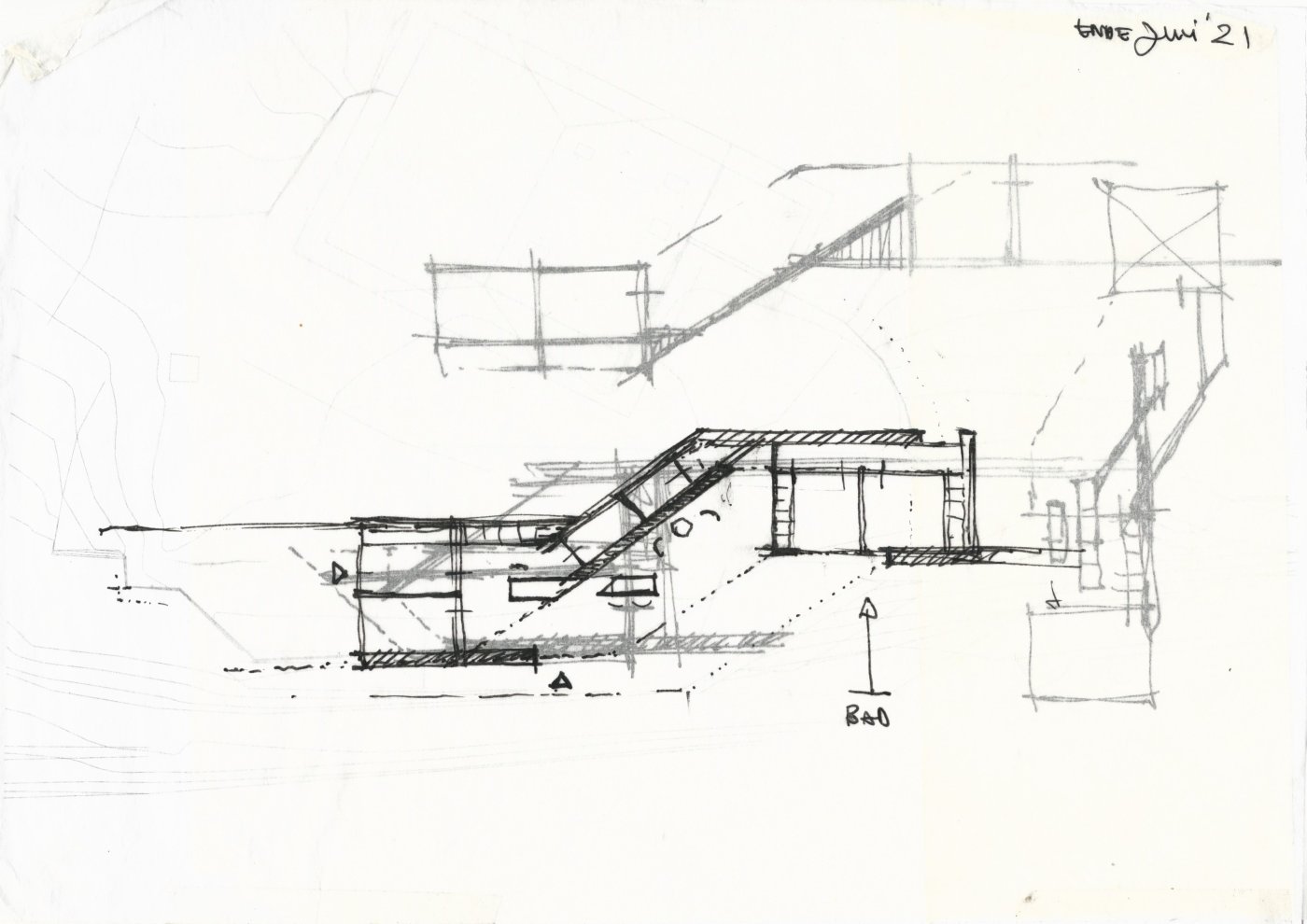


The remaining, from local building rules permitted building volume is strategically located below the existing house, adjacent to an existing retaining wall.
A wide, unobstructed view opens up, revealing a stunning panorama onto the Dolomites.


Subtly integrated into the surrounding topography, the extension is embedded within the natural terrain. In the context of the scattered, traditional farmhouses characteristic of the rural landscape, the single-story volume seamlessly follows the contour of the slope.
The main structure and its extension are interconnected below grade. The varying levels, circulation routes, and the orientation of the outdoor spaces have been designed to ensure privacy for the residents.


Exposed concrete, natural stone masonry, and glass define the building’s external appearance. Internally, rough plaster tinted with local stone aggregates, together with the use of chestnut and oak for flooring, ceilings, doors, and built-in furnishings, contrasts with the smooth plastered walls, tiled surfaces, and monochrome furniture fronts.


Following the natural slope, the single-story volume opens to the south and southeast. The newly added unit consists of a centrally located living area with an integrated kitchen, flanked by bedrooms and bathrooms.


The topographical orientation requires a precise response to solar exposure. The cantilevered ceiling provides shading for both the interior and the terrace during the summer months, preventing direct sunlight and mitigating the risk of overheating. The floor-to-ceiling glazing facing the terrace blurs the boundary between interior and exterior spaces.


